The Scent Experiences: Scent and the Art of the Pre-Raphaelites

The Scent Experiences In 1850, the founding members of The Pre-Raphaelite Brotherhood set up a journal called The Germ, to disseminate their ideas. It lasted just four issues and included a call for smell in art. The Pre-Raphaelite sculptor, poet, critic and writer John Lucas Tupper described a visit, some years earlier, to the British … Read more

Bells and Smells: Scent and the Art of the Pre-Raphaelites

Bells and Smells In Solomon’s watercolour A Saint of the Eastern Church (1867–68), a haloed young man in a decorative tunicle, with dark hair and a deeply introspective gaze, carries a sprig of myrtle and a censer that emits fumes of incense. Two lamps are suspended from the ceiling by chains, which appear to be … Read more

Spring Awakenings: Scent and the Art of the Pre-Raphaelites

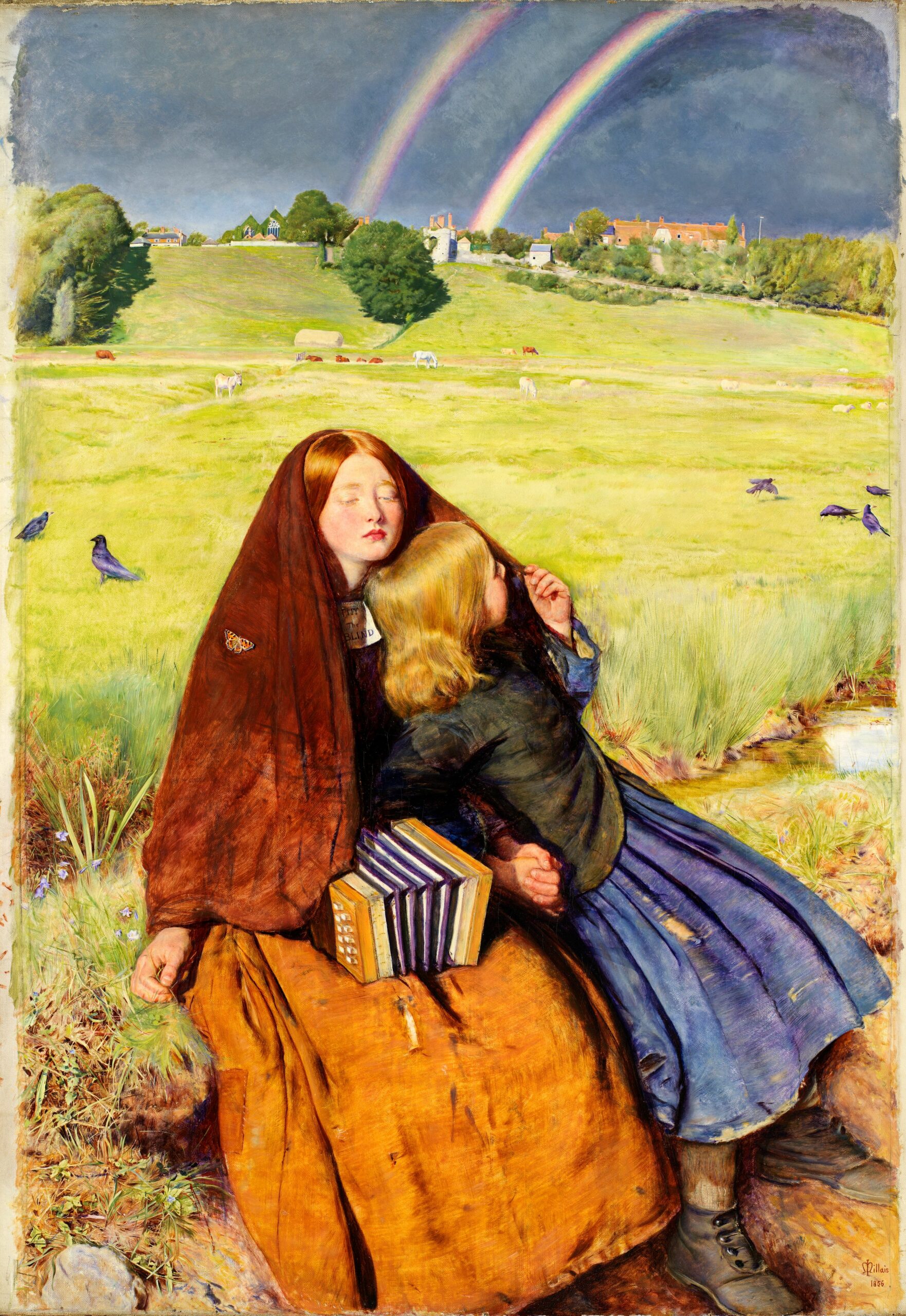
Spring Awakenings Calls for sunshine, fresh air and cleanliness by Victorian sanitary campaigners such as Edwin Chadwick influenced the trend for lighter, brighter en-plein-air paintings in the 1840s and 1850s. This trend gathered momentum as the century progressed and inspired the brightness of Pre-Raphaelite paintings such as Millais’s The Blind Girl (1854-56) and later works … Read more

All smell is disease: Scent and the Art of the Pre-Raphaelites

All smell is disease ‘All smell is, if it be intense, immediate acute disease.’ Edwin Chadwick, England’s first Public Health Commissioner, made this claim in 1846, adding that ‘all smells’ weaken the body, rendering it vulnerable to contagion.1 Belief in miasma (smells arising from decomposing matter) as the cause of cholera and other contagions originated … Read more

Curator’s Introduction: Scent and the Art of the Pre-Raphaelites

Two girls, in a meadow with a rainbow behind. One wears a 'pity the blind' sign.

Curator’s Introduction: Scent and the Art of the Pre-Raphaelites Scent and the Art of the Pre-Raphaelites explores the role of smell in mid-late Victorian art. It spans Pre-Raphaelite social realism of the 1850s and the Aesthetic ‘cult of beauty’ of the 1860s-1880s through to early-twentieth century Post Pre-Raphaelitism and Symbolism. It explores why and how … Read more